You can spend all year in Europe even if you don’t have residency there. Here’s how it works.
I’m assuming you have a US, Canadian, UK, or similar passport and can easily enter Europe as a tourist.
Do the Schengen Shuffle
You can avoid visa issues by bouncing between two zones in Europe.
The Schengen zone acts like one country
Most European countries are members of the Schengen zone.

The 90/180 rule: If you have a non-EU passport, you can spend 90 days out of every 180 in the Schengen zone. To reset your Schengen clock, you have to spend a similar amount of time outside the zone.
Simple example:
- March: Germany
- April: Denmark
- May: Poland
- June, July, August: outside the Schengen
- September: France
- etc.
Real-world cases are more complex. For example, you can spend a few weeks in the Schengen, leave for two months, come back for seven weeks, …
The 180 days is a rolling total, not defined by calendar year. Play with this calculator to see how it works.
Non-Schengen countries track your stay individually
Most non-Schengen countries also let you stay for 90 days out of every 180. However, the limit is for each country, not the region. For example, you could spend 90 days in Montenegro and then 90 in Serbia.
Currently, the most popular non-Schengen countries seem to be:
- Albania (added advantage: US citizens can stay for a year)
- Montenegro
- Turkey
- Cyprus
- Serbia
- Bosnia i Hercegovina
- North Macedonia
The UK and Ireland are also non-Schengen but aren’t as easy on your budget.
Moldova doesn’t get a lot of attention, possibly due to its location next to Russia. It offers a cooler climate than the more southern countries.
But those countries are … Balkan
If you haven’t visited the Balkans yet, it’s time. It’s far more developed than you’re probably picturing. The countries are also home to rich traditions that are still part of daily life. And if you like grilled meat and vegetables that have actual flavor, you’re in luck.
See for yourself. Click the links to see photos of each place. They all have real estate for less than USD $150k, sometimes far less.
- Lake Ohrid, Macedonia: tourist favorite
- Antalya, Turkey: beach city popular with expats
- Shkoder, Albania: laid-back, mid-sized city on a lake
- Novi Sad, Serbia: Serbia’s second city and on the Danube
Albania loves Americans: If you have a US passport, you can spend an entire year in Albania. Then you have to leave for 90 days to reset the clock.
Rent or buy a nearby home
Full-time travelers deal with Schengen restrictions by moving often, carrying everything they own. I’ve done that, and it doesn’t work for everyone.
You can get tired of moving every month or two, adapting to a new place each time. You can’t make local friends and establish traditions with them because you’re just passing through.
But if you buy or rent a home in a nearby non-Schengen country, your out-of-Schengen time – half of each year – will be in a comfortable, familiar place with friends. It will also probably cost you less than buying or renting in the Schengen.
Most non-Schengen countries let foreigners buy or rent a home without a visa.
Example
Laura has a non-EU passport and likes Country X. Country X is outside the Schengen zone but nearby. X uses the same formula as the Schengen: Laura can spend at most 90 days in X out of every 180.
Laura enters X as a tourist. She buys a small condo, some comfortable furniture, and her favorite coffeemaker. Then she starts bouncing in and out to visit countries in the Schengen zone.
Her year might look like this:
- January: Her condo in X
- February: Spain
- March: Portugal
- April: X
- May: Poland
- June: X
- July: A different non-Schengen country for a week or two, then Switzerland
- August: Slovakia
- September: X
- October: X
- November: Greece
- December: X
Laura doesn’t have to get a visa anywhere. She’s just being a tourist, even in X.
She adds the different non-Schengen country to avoid cutting it too close with the Schengen zone or country X.
If X is Montenegro, then Laura’s extra country could be Serbia. It doesn’t have to be far away; it just has to be out of the Schengen and not Montenegro.
Two homes make it easier
In love with a Schengen country? You could buy or rent a home there and reset your time with tourist rentals in nearby non-Schengen countries.
Or you could get two places, one in the Schengen and one outside. Then you could alternate between two comfortable homes and sets of friends.
Rent or buy?
Rent: Cheaper than tourist rents
A long-term lease will be a lot cheaper than the short-term rents that travelers get stuck with. You’ll probably save money even though you use the apartment for only six months.
When I’ve done the calculations, I always come out ahead with the full-year lease. Short-term rents can be three times higher than a normal lease.
It might be challenging to find a landlord willing to rent to a foreigner who doesn’t have legal residency or a job. However, I’ve signed long-term leases with just a passport and proof of income, with no residency visa.
I’d be nervous about leaving someone else’s property empty for half the year. The landlord might not like it, either. You might have a local friend or manager make regular checks.
After you rent for a while, you might decide to buy.
Buy: You probably don’t need a visa to buy
A quick check suggests that the following non-Schengen countries let citizens of OECD countries buy property without residency:
- Albania
- Cyprus, sort of (some restrictions)
- Moldova
- Montenegro
- North Macedonia
- Serbia
- Turkey
Of course, you should investigate the rules yourself and find out what the tax implications could be. For example, will owning property make you any sort of tax resident?
An apartment might be best
Some countries make it difficult for foreigners to buy beachfront property or any type of land. For example, a non-EU foreigner in Bulgaria can’t directly buy a house with a yard, because then they would own land.
There are often ways around this. In Bulgaria, it’s common to set up a paper company that buys your land and rents it to you.
But even if you can buy a house with lots of land, it might be best to buy an apartment in town. An apartment is easy to lock up and walk away from, while a house with land or on a beach needs maintenance and is more vulnerable.
But buying is too expensive!
The price is lower than you might think
Non-Schengen countries tend to have lower incomes. This is reflected in lower property costs outside tourist areas.
Sample costs from mid-2024:
- Shkoder, Albania: Many apartments and some homes from $48k to $160k.
- Antalya, Turkey: if you wrestle a bit with this site, you’ll see many apartments for sale from $67k to $130k in this popular expat city.
- Lake Ohrid, North Macedonia: This site lists many houses and apartments for sale from $59k to $150k, plus luxury properties.
- Podgorica, Montenegro: Many apartments from $55k to $150k. Podgorica is the capital and about an hour from the popular and pricey coastline.
- Novi Sad, Serbia: Many apartments from $105k to $160k.
Carrying costs can be less than you think.
If your base country is affordable and you like a modest home, you could spend less on monthly costs than you might think.
Example
I bought a two-bedroom apartment in a mid-sized city in Bulgaria, a Schengen country where I have residency. I can’t guarantee it, but I suspect that my carrying costs are similar to what you’d find in a non-Schengen Balkan country like Albania, North Macedonia, and the non-touristy areas of Montenegro.
My monthly costs:
- Property tax: about $17
- Insurance: $6-8 for a policy covering up to $97,000 in losses
- Building maintenance: $5
- Fiber optic internet and TV: $26
- Electric: about $32 if I’m there but not using heat or AC; it would be less if the apartment were empty
- Water: $6-10
Total carrying costs: about $95/month or $1140/year.
Opportunity cost: You’d also want to consider the opportunity cost of putting the money in an apartment rather than investments.
Let’s say your apartment costs $80k. Invested at 4%, $80k would give you $3200 in a year. So by buying the apartment, you’re missing out on $3200/year and spending, say, $1300 in carrying costs.
That’s a total cost of $4500/year to have an apartment that you can use for only 6 months.
If we divide that cost by 6 months, your “rent” becomes $750/month. That’s probably well below tourist rents in the same place. And unlike a tourist, you can have nice furniture, store your out-of-season clothes, and otherwise enjoy the rights of an owner.
You could also rent out your place when you’re not there, if local laws allow it.
What if your base country joins the Schengen?
If you buy an apartment just to have a non-Schengen landing pad, you run the risk of your base country joining the Schengen zone.
This would probably increase the value of your apartment but make it useless for you.
The best long-term bets might be Serbia and Turkey. While both appear to want to join the EU and Schengen, progress is slow, and both take an independent stance on EU issues.
Montenegro might join the EU in 2025. It might then join the Schengen, but there’s no guarantee on how quickly that would happen. It took Bulgaria 17 years to join the Schengen after joining the EU.
Albania might join the EU around 2030 and then the Schengen.
Bosnia i Hercegovina has been a candidate for EU membership for years, but there’s no clear timeline.
Moldova is hoping to join the EU by 2030, and Schengen membership could follow.
The UK and Ireland are unlikely to join the zone. Their main challenges for the Schengen shuffle are their higher costs.
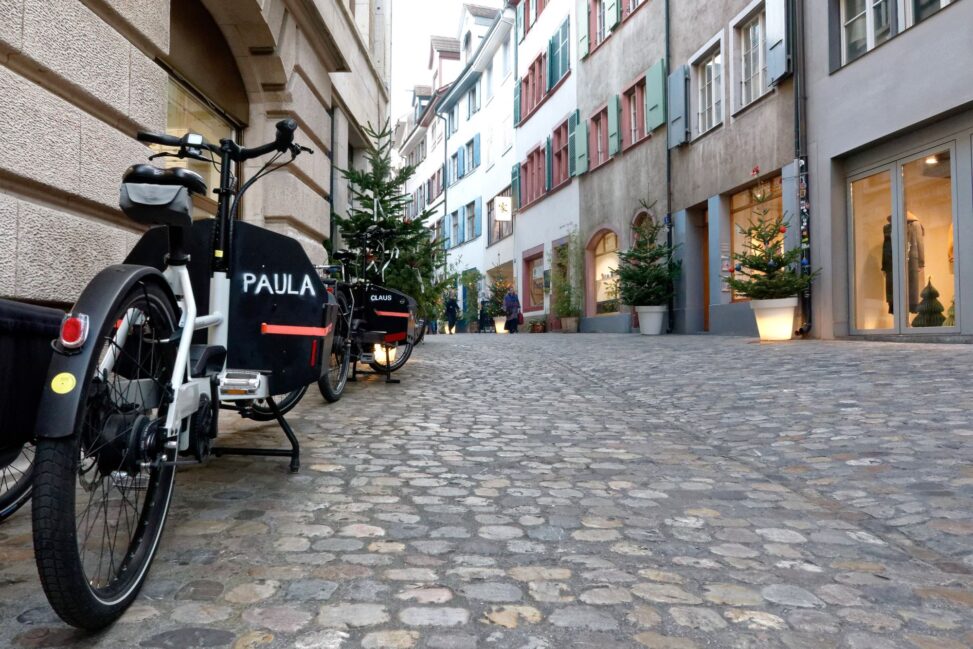
Photo at top: Basel, Switzerland